The best reading light for bed is one you can aim at the page and adjust without a fuss. A small reading light may work better than a bright bedside lamp when someone is asleep beside you.
These three Glocusent lights offer three different ways to read: clipped to a book, worn around your neck, or fixed to a headboard. This is a focused comparison of those designs. The right shape matters more than buying the lamp with the most LEDs.
Which reading light fits your bed?
| Your reading setup | Best fit in this shortlist |
|---|---|
| A paperback in bed or in a travel bag | Glocusent Bookmark Style |
| No clip or weight on your book | Glocusent original neck light |
| A fixed place beside your pillow | Glocusent 36 LED headboard light |
Prices below were listed by the brand in September 2026. Sales, colors, bundles, tax, and shipping can change what you pay.
1. Glocusent Bookmark Style: best for a small book light
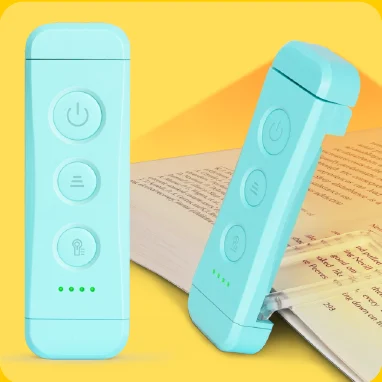
This rechargeable book light weighs 40 grams and clips to your book. It offers five brightness levels and three light tones. At a listed $21.58, it is a compact choice for readers who want one light for home and travel.
The built-in USB-A plug is the detail to notice. It charges without a separate cable, but you need a suitable USB-A port or adapter. A phone charger that only has USB-C will not take it directly.
The light head can turn, so you can aim it toward the far page. Do not twist it past the limits in the instructions. The memory function keeps the last brightness setting, which saves a few button presses at bedtime.
Why choose it: A clip-on light moves with the book when you shift in bed. It also leaves your bedside table free.
Why skip it: Even a light clip adds weight to a paperback. Thin covers can bend, and you may need to move the clip as you reach the end of the book. If you dislike anything touching the pages, the neck light is a better fit.
The maker gives a broad battery range of 10 to 80 hours, based on brightness. Plan around the setting you use, not the longest claim. Keep the reading light charged before a trip.
2. Glocusent neck light: best for keeping the page clear
The Glocusent original neck reading light rests around your neck and has two flexible arms. Each light head has three brightness settings. The listed price was $24.99.
Its three color modes range from warm white to cool white. You can aim the two heads at different parts of the open book. It charges by USB-C and does not need to grip a cover or page.
Why choose it: Your hands and book stay free of a clip. This design can also suit reading in a chair where there is no shelf for a lamp.
Why skip it: A light around your neck may get in the way if you lie flat or curl onto your side. The beam moves when your body moves, so it may need a new angle each time you settle.
For a shared bed, aim both heads down toward the book. A neck light is not a promise that no light will reach your partner. The angle, brightness, and distance all matter.
The brand's longest battery claim uses a low-power setup. Two heads on a bright setting will not match that figure. Charge based on your own reading pattern.
3. Glocusent 36 LED: best for a fixed headboard light
The Glocusent 36 LED clip-on reading light clamps to a bed headboard, shelf, or desk. Its flexible gooseneck lets you bring the light over the page. The standard model was listed at $27.98.
This is USB powered, not a rechargeable book light. The supplied cord is 7.5 feet long, and the listed package includes a power adapter. That can suit a regular bedside spot, provided the cable reaches safely.
The clamp opens up to 2.36 inches. Measure the place you plan to attach it. A thick padded headboard or a curved rail may not give the clamp a firm hold.
There are five brightness levels, three color modes, and a 30-minute auto-off setting. The power indicator stays lit when plugged in. That small glow is worth knowing about if you like a fully dark bedroom.
Why choose it: It stays off your book and avoids battery charging. A fixed reading lamp can be easier to return to night after night.
Why skip it: You need a safe clamp point and a nearby power source. It is less useful for travel than a small book light. The lamp also needs a new angle when you move far from your usual spot.
Book clip, neck light, or bedside lamp?
A book clip is the most direct light source. It is close to the paper, so you can often use a lower brightness. The trade-off is weight on the book. Try clipping near the spine rather than far out on a thin page.
A neck reading light puts the weight on you. It follows your body instead of the book. That can work well when you sit up, but less well when your chin or blanket blocks the beam.
A headboard reading lamp stays in place. It is useful for a fixed bedtime reading spot and leaves your hands free. Its fit depends on the bed frame, not just the lamp's features.
A bedside table lamp can light more of the room. That may be pleasant when you read alone. In a shared bedroom, a broad shade can spill more light than you want. A reading lamp with a narrow, adjustable beam may suit you better.
Before buying anything, try the light you own from a new angle. Move it closer to the book and away from your partner. A good position can solve a problem that more brightness would make worse.
Warm white or cool white?
Warm white looks more yellow. Cool white looks more blue. Neither label tells you how bright the lamp is. A warm reading light can still be too bright, and a cool light can still be dim.
At bedtime, start with a warm tone and low brightness if that feels comfortable. Then adjust until the print is clear. The aim is an easy-to-read page, not the darkest possible room or the highest setting.
Do not treat an “eye caring” label or blue light claim as proof that a lamp will prevent eye strain or give you good sleep. A product label is not a personal health result. Brightness, glare, print size, and how long you read all affect comfort.
If the paper has a glossy finish, move the light until the bright reflection is out of your view. Turning the lamp up can make that reflection worse. Change the angle first.
How to keep light on your side of the bed
In a September 2026 discussion on Reddit's r/readwithme, one reader liked a neck light aimed down at the book on its lowest warm setting. Another found adjusting a book light in bed a nuisance. These personal reports point to a useful test: check the light while you lie in your normal reading position, not just while you sit at a table.
Place the reading light below your partner's eye line when you can. Point it down at the pages, not across the room. A light that sits high above the bed can cast a wide pool over both pillows.
Start on the lowest useful setting. Turn a few pages and check the far edge of the book. You want both pages clear without a bright spot in the middle.
Check from the other pillow too. A light can seem soft from behind the lamp and look harsh when you face the LEDs. A shielded light head or a better angle may matter more than a warm color mode.
If any light keeps the other person awake, an audiobook may be a better late-night choice. Our Everand vs Audible comparison can help you choose a listening plan. Use headphones at a level that suits you and does not disturb the room.
Do you need a reading light for an e-reader?
Many e-readers have a built-in front light. You may not need a separate bedside lamp at all. Our Kindle vs Paperwhite guide explains which model adds a warm-light setting.
For paper books, a separate reading light still earns its place. It lets you keep reading without turning on the main bedroom light. Choose one that fits the way you hold a book, not just the look of your bedside table.
Check the bedside setup before choosing a lamp
A reading light for bed has to fit the space as well as the book. Take a look at the headboard, bedside table, wall outlet, and place where you rest your shoulders. That quick check can save you buying a reading lamp that has nowhere useful to go.
If you have a thick or padded headboard
A clamp needs a firm edge. Thick fabric and deep padding can leave a clip-on reading lamp with a weak hold. Do not force the clamp onto a bed headboard that is wider than its stated limit.
Try a nearby shelf or the edge of a bedside table instead, if it gives the clamp a safe grip. Check the reach of the adjustable gooseneck from that point. The light head needs to reach the book, not just point toward the bed.
If there is no good clamp point, a neck reading light avoids the problem. A table lamp may also work if you have room. The best lamp is not useful if it slips every time you turn a page.
If you use a nightstand for more than books
A nightstand lamp competes with your phone, a glass of water, and the book itself. A small base can help, but check that it stays steady. Do not place a lamp where a reaching hand can knock it into the bed.
A clip-on reading light can leave the top of the nightstand clear. Route the cord behind the bedside table. Keep it out of the path where you get up at night. The neatest setup is the one you do not have to move each evening.
If you read at a desk too
A desk light may need to cover more space than a bedside reading light. At a desk, you might have a book, notebook, and computer spread out. Desk lamps with a broad beam can help there, but the same beam may light too much of a shared bedroom.
Use an adjustable gooseneck to change the angle when you move between tasks. Check the brightness levels from your normal seat. A lamp that looks dim across the room can be bright enough close to the page.
Desk lamps are not always easy to move. A heavy base and a short cord can make a desk lamp awkward at the bedside. A clip-on reading lamp is more flexible if both surfaces have a safe edge.
Brightness settings that are useful at night
More brightness levels give you more choices, but the lowest setting matters most for night reading. A reading lamp with five settings can still be too bright if its first step is high. Try the lowest level in your usual room as soon as you receive it.
Stepless dimming lets a lamp move through a smooth range. These three picks use set brightness levels instead. Neither approach is always better. A few clear steps can be easier to use when you are tired.
Touch control can look neat, while a raised switch can be easier to find by feel. Think about how you will turn the reading lamp off from your pillow. Do not pay for extra features that make a simple job harder.
Ambient light matters too. A bedside lamp does not work in isolation from the room. A small amount of soft light behind you may change the setting you find comfortable. Adjust the reading light for the actual room, not just the photo on the box.
Quick answers about reading lights
Can a USB port power any reading lamp?
No. Check the lamp's power needs and the USB port's output. A computer port, wall adapter, and built-in bedside USB port may differ. Use the supplied adapter when the maker calls for it.
A USB powered reading lamp also differs from a rechargeable book light. The first needs power while you read. The second stores power for later. Check that detail before you pack a lamp for travel.
Is a warm white lamp always better?
Warm white is a color choice, not a brightness limit. Many readers like warm white at night, while others prefer a cooler page. Choose a light with a tone you enjoy, then set its brightness to suit the print.
Do not expect warm white alone to prevent eye strain. If the page is hard to read, check glare, distance, and print size too. A lamp cannot fix every cause of discomfort.
What is the best reading lamp for a bunk bed?
Start with safe mounting and cord placement. A headboard clamp must grip firmly and stay clear of moving parts. Follow the bed maker's and lamp maker's guidance. Do not stretch a cord across a ladder or sleeping space.
A small reading light clipped to a book avoids a fixed mount. It still needs to stay clear of bedding. The size of the bed does not remove the need to use the light as directed.
Should you buy a reading light as a gift?
Book lovers may appreciate a lamp, but ask how they read first. A clip-on light makes little sense for someone who only uses a lit e-reader. A neck light may suit someone who reads in several rooms.
For a gift, clear controls and a useful charging method can matter more than a long list of features. Keep the receipt. A bedside reading lamp is a personal fit, much like a pillow.
What to check before you buy
Check the charging port or power cord first. Then check the mounting point. A lamp that cannot charge from your travel kit or grip your headboard is not a good fit, however many settings it has.
For a clip-on book light, think about your thinnest paperback. For a headboard lamp, measure the edge and route the cord away from pillows and moving bed parts. For a neck light, think about whether you sit up or lie down to read.
Keep lamps clear of bedding and follow the maker's instructions. Do not hide a powered light under a blanket to soften it. Choose a lower setting or a better angle instead.
Our first pick is the Bookmark Style light for its small size and simple purpose. The neck light solves the clip problem. The headboard light solves the charging problem. Choose the one that removes the small annoyance from your own reading night.